CHINESE POSTPUNK ANTHOLOGY
We keep a gathering of records, loosely sewn from scattered remnants, not yet pressed into a shape.
The Three Mice, Shenzhen’s Loudest Bedroom Band
A translation of a long interview with The Three Mice, originally posted on Xiaohongshu by the band’s official account.
Since forming in 2022, The Three Mice (鼠鼠鼠 Shǔ Shǔ Shǔ) have quickly built a following. Their appeal rests on their cute looks and a lo-fi, bedroom-style sound, drawing from indie rock, alt-rock, noise rock, emo, shoegaze, and whatever else happened to be lying around. That sound is backed up by their half-feral live shows. Their ongoing national tour has been sending crowds into a frenzy wherever it goes.
Their debut album Where is my mice? came out just last month, and is being widely discussed as one of the best albums of 2026.
The interviewer is 量子 Liangzi, a Chinese music blogger. Some of the questions have been trimmed, and the original post is packed with photos.
Check out the original: 🐀³采访一则
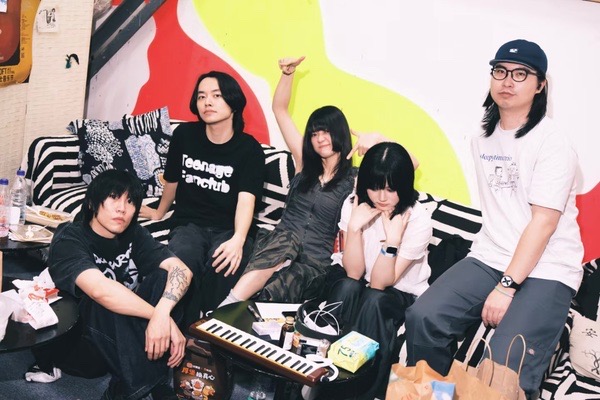
Liangzi: Hello to everyone in The Three Mice!
I’m Liangzi. First, my sincerest greetings to all of you, and thank you for this chance to talk. As someone who’s kept an eye on China’s underground music and independent bands for a long time — a listener and a record-keeper more than anything else — I’ve always been drawn to bands that keep making music in earnest, and The Three Mice have stood out to me in particular.
In preparing for this interview, I went through a fair amount of material on the band and listened to your records again and again. Beyond the music itself, I’ve also been curious about how the band has grown since it started, the stories between its members, what daily life in the Shenzhen scene looks like, and the thinking hidden behind the work. So I’m hoping this interview can help people understand The Three Mice more deeply, and let more listeners see the real, vivid you beyond the music.
What follows are some questions around how the band came together, your approach to songwriting, making the album, life on the road, and each member’s own story. I’m looking forward to hearing the story that belongs to The Three Mice, and I’m grateful you’ve taken the time for this.
I hope everything The Three Mice do goes smoothly and stays fun, and that your music gives a lot of people some strength.
How did The Three Mice come together, and where does the name come from? I’ve heard it’s a nod to Three Blind Mice (the Japanese jazz label). Is that true? Do you still like the name?
bolin: The Three Mice were born in 2022, when k and la came round to my studio. We did karaoke with whatever gear we had lying around, and after hearing them sing, I couldn’t help asking them that night to start writing songs together.
The name’s a playful riff on Three Blind Mice, but it’s also a nod to The Field Mice. I can’t remember whose idea it was, but we were all amused by the idea of the “sewer rat guy” meme at the time. No regrets. No deep meaning — we just picked it, hahaha.
la: I still remember that day clearly. We sang 陈绮贞 Cheer Chen and Clairo together. That’s when we started sharing music, and our lives. I was drawn in by k’s voice, moved by bolin’s melodies. Music was the thing that bound the three of us together.
As for the name — I remember we’d just had our eyes tested around that time. bolin’s eyesight came back as “mole-like.” k’s and mine were basically “near-blind.” So bolin joked, “We’re the three blind mice,” hahaha! We happened to be planning a Field Mice cover around then, so we parodied that as well. I really love it.
Where does each member currently live?
bolin: k, la, Jun, and I are all in Shenzhen. ChaI’s in Guangzhou.
Are any of you active in other bands or projects?
bolin: ChaI drums for “Bennu is a Heron” (a screamo band from Guangzhou), and also fills in for Die! Chiwawa Die! (a Guangzhou hardcore band) whenever they play live. This is partly why The Three Mice! Always Screaming (鼠鼠鼠!一直在尖叫) contains a small tribute to D!CD!.
ChaI: Bennu is a Heron / hane / Die! Chiwawa Die! / Shameless / 南国起义 Rise of The South Land
la: Everyone should check out Bennu is a Heron — they’ve got a show coming up in Kuala Lumpur.
What are your thoughts on collaborating with Small Animals Records (SAR)? Any other labels worth watching?
bolin: SAR’s the best! (bolin runs Small Animals Records)
Among the newer labels: 深邃船长 Captain Deep (Shenzhen), OK Records (Shenzhen), 猫啤 Catbeer (Hangzhou), 纸杯唱片 CupPhone Records (Nanjing), 露珠 DewDrop (Nanjing), 宝瓶 Januarians (Sichuan), 不中音乐部 (Sichuan), 和平星 (Zhengzhou), 小组 (Beijing), and others. They’re all run by dedicated music fans in their own cities doing all kinds of DIY work to build connections and spread the music around. lomo, who has run 快乐唱片 Happy Records (Hangzhou), does something really worthwhile with a WeChat public account (roughly, a blog service) called “lomo’s Music Notebook (lomo的音乐笔记本).” It’s a modest network, but younger generations across different places are joining hands and drawing a new map for the future.
Jun: Keep the rich water in your own field (“肥水不流外人田” support your local scene and keep the talent within the community). Guangzhou and Shenzhen have independent promoters and labels like We Present and TripleStoneBooking, who have been so deeply immersed in skramz and hardcore among others. They have much smaller reach compared to the emo and shoegaze scenes that have really taken off in China recently, although the former two are currently enjoying a fresh wave of revival overseas. People are putting on local shows, inviting bands from overseas, building a scene from nothing and growing it. That kind of work is only possible through sacrificing your own time and energy, and it deserves a great deal of respect. Anyone interested in that world should keep an eye on it.
People often file The Three Mice under shoegaze, noise rock, emo, or screamo. How do you define your own sound? Don’t you like being labelled?
bolin: I once saw someone say that “Every Three Mice song has mouse-flavour (鼠味),” and honestly that’s the description that fits best.
ChaI: Doesn’t matter. Not interested in that stuff.
la: “Good song (好听)”, that’s enough.
What gear does each of you use, and how do you feel about it? Blending so many genres must take real skill — what do you focus on when you practise? What amps and pedals give you that signature sound, at once perfect for screaming your lungs out in a bedroom and totally immersive when played live? Is there any secret-weapon pedal you can’t do without?
bolin: For the screaming, it’s probably down to listening to my favourite music over and over. Beyond that, it’s just endless, fairly clumsy practice that eventually makes its way onto the album. There’s no secret-weapon pedal — everything’s pretty basic. I think “feeling” matters more than gear.
That said, purely by coincidence, the pedal I’ve used the longest is a RAT. If you’re thinking of buying one, get the one with the American chip.
Jun: A Korg synth. Loads of presets, warm sound, has string sounds built in, and it’s light enough to carry around, which helps. As for screaming — warming up your throat properly is the important bit.
ChaI: Snare: Ludwig LM402. Cymbals: Sabian AAX X-Plosion (14/16/18/21). Pedal: TAMA Speed Cobra 910. Beater: DW SM110. Sticks: TAMA O-JZ.
la: Nothing replaces the charm of a Precision Bass.
k: Lately I’ve mostly been playing a Jazzmaster of unknown origin that I picked up on Xianyu (a flea-market app) back in 2024.
A few days ago I finally found out who made it (・・; — thanks for the lovely guitar (^^)a.
Favourite pedal’s the Mooer Mod Factory MKII.
What bands have shaped how The Three Mice write songs?
bolin: Yo La Tengo influenced my guitar tone, The Field Mice shaped the way I approach vocal melodies, and Your Arms Are My Cocoon influenced how we write and arrange. Beyond that, we’re influenced by DIY music scenes all over the world.
Jun: Bands like Mineral, I Hate Myself, Indian Summer, The Get Up Kids, and Old Gray have influenced both my songwriting and my stage presence.
ChaI: Punk rock.
What is the essence of noise rock to you? Is there an element you consider absolutely essential?
bolin: Flowing beauty.
Jun: The vibration of an object.
ChaI: Punk rock.
la: Endless flow of energy.
k: The feeling at the moment a sound is made.
With a new tour starting soon — do you prefer bigger or smaller venues? Does anything that happens on tour end up feeding back into your songs or arrangements?
bolin: Definitely. Meeting all kinds of people, seeing unfamiliar landscapes and cultures — all of it feeds back into the music. We all prefer smaller venues, honestly. If the room’s too big we get restless and end up jumping off the stage, going into the crowd, haha.
Jun: I like venues with no barricades at all. The closer we are to the crowd, the better. If the stage is low, people can climb up easily, and that’s when the dives, sing-alongs and mosh pits really take off. If that’s not possible, I’ll just come down to everyone instead.
ChaI: Doesn’t matter. Anywhere we can play is fine.
Who handles the band’s visual side? Are you happy with what your designer comes up with?
bolin: This cover’s a collage built from an illustration I drew, which zzcircle (SAR’s designer) turned into an 8-bit-style design. She’s designed a ton of our merch too, and I think everyone’s going to like it — she always brings fresh ideas to the table.
Jun: zzcircle is the best.
la: zzcircle is great.
Where Is My Mice? and the 2024 debut EP were apparently completed through improvised jam sessions — how long did that take? Which track on the album stands out most to you? What does the phrase “where have all our friends gone?” (the meaning behind the Chinese title, 我的朋友,你们究竟都去哪了?) reflect?
bolin: The one that sticks in my mind the most is Stay Home Club. Writing it was genuinely painful. I’d intended to refine the playing and melodies, throw in some solos. But once we’d finished it together as a band, everyone said they loved it just as it was.
“Where have all our friends gone” means exactly what it says — it’s about the loss and separation that quietly creeps in as you grow up.
Jun: Goodbye, Mickey Mouse (再见米老鼠) is about places, people and a way of living that I once tried to run away from — it’s a story of regret and reconciliation with mistakes I made in the past.
la: The first time I heard the demo for Stay Home Club it hit me hard — it felt like bolin had pushed past his own limits. I went home that day and sang it to myself over and over. I love the big final chorus especially; it really captures the band’s “long live friendship” spirit. It nearly made me cry.
Personally, the one that means the most to me is Melancholy Cheers Paradise (忧郁干杯乐园) — because that’s the one where I broke through my own limits.
Where Is My Mice? — your debut full-length — centres on loneliness, connection within a community and scene, and the fantasy of being in a band. As a theme, it strikes me as balancing a kind of quiet disengagement against real vitality, within the current noise rock and shoegaze scene. To me, your music seems to help young people, as they grow, search for a sense of self and long for belonging, and it eases the existential anxiety of being just another tiny “mouse” inside a vast social machine. As a young band from Shenzhen, why did you choose to build the whole album’s sound around something that feels this chaotic and yet this personal? Who mainly writes the lyrics? When you’re turning the private emotion and spontaneous inspiration of bedroom production into finished lyrics, how do you find the right measure of expression — do you lean towards pouring out raw feeling without holding back, or do you weave in a way of thinking that’s particular to your generation?
bolin: I’m actually part of the post-95 generation and I’ve been listening to Chinese rock from its early era. The Three Mice gave me a way into younger DIY scenes both in China and abroad, and through that I’ve kept expressing things as if I were still young myself. This album leans heavily on inner, personal feeling, so when people tell me it resonates, that it’s been a comfort or an encouragement, it puts me at ease and makes me feel connected to everyone listening.
Stay Home Club, Melancholy Cheers Paradise and Goodbye, Mickey Mouse are all built out of my own personal struggles. Our restraint is in how we dilute that pain — through humour that distracts a little, or through musicality that carries more of the weight, so it never becomes venting for venting’s sake.
One thing that particularly caught my attention on this album was your cover of The Velvet Underground’s I’ll Be Your Mirror, retitled 我是你的老鼠 (I’m Your Mouse).The tenderness of the original — which feels like a warm embrace — is genuinely moving. The distance and dissonance created by changing the word to “mouse” is fascinating. Why did you choose this song for the cover? In the context of “I’m Your Mouse,” what feeling were you most hoping to convey to listeners?
bolin: I just hoped whoever got the reference would laugh.
Jun: It’s a nice song (好听).
la: What Jun said.
Compared to your earlier work, Where Is My Mice? shows clear growth and depth. The bittersweetness and nostalgia that only comes with adulthood feel like it reflects how the band has changed over these past few years. What do you think has changed most about The Three Mice? Has there been technical growth, a shift in your sense of aesthetics, or a change in how you see life and the world?
bolin: Yeah, this album is a lot more mature. I think people notice that mostly thanks to ChaI’s drumming and the mixing improvements made by 鸡笼 Jilong (who served as the album’s engineer and co-producer). Personally, making something with talented friends is just enjoyable — bringing everyone’s wisdom together to leave behind something that lasts. Our playing isn’t particularly flashy, and we’re clumsy, so we just have to learn as we go, one thing at a time. There are moments in rehearsal when I can feel how much effort everyone’s been putting in behind the scenes, and it makes me feel genuinely lucky.
la: Someday I want to play well enough to talk back to bolin.
Away from the music — I also really love how you all look and carry yourselves. Not just the live shots and promo photos, but your everyday style too, unpretentious and natural, with a real sense of cuteness (可爱感) to it. Do you have any particular thoughts on the band’s clothing or visual image? Is there a look you’re going for, or is comfort and being yourselves the priority?
bolin: I always wear a band T-shirt when we play, so on show days you’ll find me standing in front of my wardrobe going, “Which band T-shirt feels right for tonight’s mood…,” haha.
Jun: Comfort and personal taste come first, which naturally leads to a band T-shirt.
ChaI: Loose, easy to move in. A towel is a must at shows.
Tell me about the first time you heard rock music. How old were you, what were the circumstances, and what was the band or record? Was it an encounter that ended up decisively shaping your later musical path?
bolin: University, for me. A bit embarrassing to admit, but 痛仰 Miserable Faith’s Change Your Life (改变你的生活) definitely left a mark on me lol. The bands that changed the way I listened to music were 透明雜誌 Touming Magazine and Chinese Football.
Around that time I’d managed to pick up a Kurt Cobain-model Jaguar for cheap, but after getting into Chinese Football I switched to a Telecaster and sold the Jaguar off. I regret that now.
Jun: I was 12 or 13. Avril Lavigne’s Let Go. Right around when we’d just started getting dial-up internet. I’d check the charts on Kugou (a music streaming service) and download whatever I liked, one MP3 after another, and listen on the way to school. All-American Rejects and Fall Out Boy were in there too. I wouldn’t say it was a formative influence exactly, but it was fun listening to all kinds of music at once. Looking back on it now, it feels genuinely nostalgic.
ChaI: Green Day, American Idiot. 大魔王 TaiMokWong, 错过错. King Ly Chee, Time Will Prove (时间证明). Departures, Teenage Haze.
la: In secondary school, going through my edgy teen phase, I’d have Rammstein or AC/DC — bloody, violent stuff — playing on my Qzone (an SNS-like platform). And a lot of fighting games featured metalcore tracks; I had no idea what the lyrics meant, but listening to them made me feel cool.
Once I got to university I joined a club and started playing punk covers — 指人儿 Finger Family, most often. Looking back, it’s a fairly touching little episode — though being 20 and being 30 feel completely different, of course.
k: Probably primary school — I couldn’t start my homework without watching music videos on MTV every day.
If a young person heard The Three Mice and decided to start their own band — a noise rock band — what advice would you give them?
bolin: Trust your own instincts above everything. If you really try to feel it, the sound will come to you.
Jun: What influences you is always whatever you’ve already been listening to.
ChaI: Rock will only ruin you.
la: Nothing happens if you do nothing.
k: Believe in yourself!
Over the years of being in a band, you must have met people from all sorts of cities and scenes. How have they influenced you? Has any particular encounter changed how you think about music, life, or the band?
bolin: I’ve been shaped by overseas DIY music communities. They aren’t confined to a single genre or style — a screamo band’s member might turn out to actually be a jazz musician. And in fifth-wave emo, which many people still can’t accept, some of the artists have genuinely deep musical training and can play a remarkable range of instruments. Even so, they choose emo because it’s the form best suited to turning insecurity and artistic expression into a kind of beauty — they aren’t writing songs from ready-made template or the “obvious” way of doing things.
That distinction matters a lot to me. It’s given me the confidence, when I’m writing, to make deliberate choices about what sound actually serves the emotion I’m trying to express, rather than defaulting to habit.
Jun: Probably shaped a part of how I see the world, I’d guess.
ChaI: Shout out to my colleagues at HEDD. Thanks for supporting me all these years.
Do you have a personal favourite genre outside the band’s sound? Has anything quite far removed from The Three Mice’s style still ended up shaping your creative work?
bolin: I always listen to Mayday. I believe listening to Mayday helps you stay a healthy grown-up kid.
Jun: I’ve listened to 张震岳 A-Yue Chang for years, but it hasn’t influenced my songwriting at all. As for something unexpected — maybe 陈冠希 Edison Chen (laughs). The albums he made during his EEG days are actually pretty good. Honestly, I just like music that’s genuinely pleasant to listen to (好听), music my ears are used to.
ChaI: Fred Again
k: NEW JEANS NEVER DIE!!!!!
Every band has one or two predecessors who felt especially important in their early days. Does The Three Mice have any goals, idols, or role models — bands or musicians you look up to? And is it the music itself that draws you in, or their attitude and way of living?
bolin: There are a handful of albums I hold up as goals. When you hear something truly great — Yo La Tengo’s Electr-o-pura, say — it’s hard to believe it’s thirty years old. It leaves me full of questions and wonder. Nobody’s managed to surpass the giant yet. We talked about this a lot with Jilong while making Where Is My Mice? We want to make something that lasts.
Jun: Michael Jackson’s music, and Michael Jackson himself, have been an irreplaceable presence in my life.
ChaI: The only person I’d call an idol is Ayuni D.
Beyond noise rock, emo and shoegaze, is there a genre you practise or study on your own? Has learning across such different styles fed back into The Three Mice at all?
bolin: The rhythm before the chorus in “Good Morning” was inspired by Ben E. King’s “Stand By Me.”
Jun: Simple pop songs, jazz standards — any genre really, whenever I’m playing something I love it’s a lovely feeling✌️
ChaI: Personally I mostly just listen to Sleep.
la: I like pop music.
k: Jazz…
A lot of bands are first drawn together by a shared love of music, but staying together long-term usually takes something more than that. Is what holds The Three Mice together mainly a shared love of music, or is there also some underlying compatibility in personality and values? And in your view, does The Three Mice have any member who’s irreplaceable? Is that irreplaceability more about technical skill and songwriting ability, or more about spirit and what holds the group together? If one member left someday, would The Three Mice still be The Three Mice?
bolin: I hope nobody leaves. If someone did, I’d just go off and start another band.
Jun: friendship > music
ChaI: If this band ends, I’ll go start another one. No band ends well anyway.
la: I don’t want us to break up. But if it came to that, I’d just go back to being a plain old listener.
k: I’ll go with the flow.
Do you remember your very first show as The Three Mice? Looking back now, what’s the biggest difference between then and now?
la: Our first show was in 2023. The biggest difference is probably that back then I was just nervous the whole time, and now I actually enjoy it.
The Three Mice were born in Shenzhen, and Shenzhen has always struck me as a city full of contradictions: young, open, brimming with opportunity, and at the same time running at breakneck speed, fiercely competitive, leaving a lot of people feeling isolated and adrift. To what extent do you think this city has shaped the band’s music and character? Has living here changed how you understand music, friendship, love, and growing up? If The Three Mice hadn’t come out of Shenzhen — if you’d formed in Beijing, Wuhan, Chengdu, or somewhere else — do you think the band would have turned out differently?
bolin: There are loads of good shows in Shenzhen, and information’s easy to come by. You can also avoid a lot of pointless socialising. It suits me pretty well, I think? Though maybe that’s partly because I don’t travel to other cities that often.
Jun: I don’t think it would make any difference.
k: As someone who grew up in Shenzhen — this city’s the best, honestly.
Has the band ever come close to a break or a split?
bolin: There was a moment when I thought we were done for. Nobody replied in the group chat for a while. But the moment we were all in a room together again, the worry just vanished.
la: The fact we’re all sitting here right now is proof enough of that.
Bedroom recording is a hugely important part of indie music and DIY culture — a lot of great work comes not out of expensive, professional studios but out of bedrooms, flats, and dorm rooms. What do you think about bedroom recording? What’s the appeal of it? A lot of young musicians today rely entirely on a computer and software to create — is there anything you’d want to say to them?
bolin: Personally, I think the current social environment and the general state of people’s minds are far too repressive. So I’d rather make something loose and relaxed than something over-polished. That kind of personal, unpolished approach also lets us stay closer to our fans, I think. I’ve long loved listening to TikTok slowcore artists like Sign Crushes Motorist and I Don’t Like Mirrors, and following the other projects they’re involved in has really opened up my world.
Also — from experience, I think working by feel matters more than anything. Music isn’t something you make from a template or a manual.
Jun: I love bedroom music. It’s deeply personal, deeply emotional, made in a place that feels safe. A bedroom is your own sanctuary — nobody cares what you do in there. Sit, lie down, stand on your head, get undressed, roll around, cry your eyes out — whatever. You can let your feelings out completely. There’s a rawness and honesty to music made like that. My recommendation: Onelinedrawing’s Visitor.
Over the past few years, genres like emo, screamo, and shoegaze — and adjacent to them — have been gaining more and more attention in China’s indie rock scene. Young bands keep emerging, and listeners have increasing opportunities to encounter these sounds. As musicians right in the middle of that shift, how does that feel to you? What developments give you a sense of hope, and what worries you? What do you think is missing from the Chinese scene right now? What are your hopes for where things go next?
bolin: I think it’s a genuinely good thing that there are so many bands now. Even bands that aren’t great at recording are putting themselves out there — that’s a positive sign either way. That said, the number of bands is still pretty small overall. To my mind, a scene is really thriving once you’ve got two or three bands in the same city who are simultaneously friends and rivals — when the other lot make something amazing, it pushes you to surpass your own limits too. That’s when I’d say a scene has truly caught fire.
Right now there just aren’t enough experienced producers, and not enough accumulated production know-how in that area. As for what I’m hoping for — actually, let’s just say I should focus on my own thing.
Jun: That’s a good thing!
ChaI: What’s missing is love.
k: What’s missing is people taking it seriously o_o
The internet has completely changed how music spreads. Back when word of mouth was everything, it’s different now — upload a demo and it can reach the whole country in minutes. What do you make of that shift? Has the internet made indie music richer? Have algorithmic recommendations, short-form video, and fragmented listening habits changed how people listen to music? Has it made things easier for bands, or harder? Any funny stories that came out of the internet’s influence?
bolin: I like the internet. It lets like-minded people find each other. And every online community has its own possibilities. A post online can catch someone’s eye and lead you to people who share your tastes. The internet lets you get your music to the exact people you want to reach, and lets you actually see how they respond.
Jun: I’m grateful for the internet. The greatest invention in the history of human civilisation.
la: It’s strange, in a good way, how a single song can turn total strangers into close friends. I once had an online friend from Warcraft, and it later turned out that he also loved rock; we’d been at the same shows without knowing it.
k: There are good sides and bad sides. Take the good, get rid of the bad.
A lot of bands post constantly on social media, make short-form videos, study the algorithm, all to reach more listeners. The Three Mice seem to move at a fairly relaxed pace by comparison. Is that a deliberate choice, or just how things have played out? How do you think about the relationship between making music and promoting it? If The Three Mice suddenly found yourselves with a huge spike in views and attention, would you actively try to adapt to that? How should an indie band balance self-expression against expanding its reach?
bolin: If we can keep our eyes on the music and the scene itself, and not get distracted by everything outside it, I think we can stay who we are no matter how popular we get.
ChaI: I make music for self-expression and for the local scene. That’s why I still live in Guangzhou — nothing else really interests me.
la: Views are an amplifier, never a changer.
Everyone has an album from a particular period of their life that completely reshaped their sense of music, or even their whole worldview. Tell me about the album that influenced you most deeply — the one that changed the way you live.
bolin: 朴树 Pu Shu, I visit the year 2000 (我去2000年).
Jun: Michael Jackson’s Off the Wall. I heard it right around the time I’d just started having the freedom to look for music on my own, and I think that’s what shaped my taste from then on.
ChaI: Age Factory, Everynight.
la: A stormy weekend afternoon, headphones on shuffle, when Kinoko Teikoku came on.
**k:** 张悬 Deserts Chang’s My Life Will…
— End —